João de Deus School Cluster (AEJD), in Faro, strengthens vocational education with its Specialized Digital Technology Center - a project that brings the school closer to the realities of the audiovisual market.
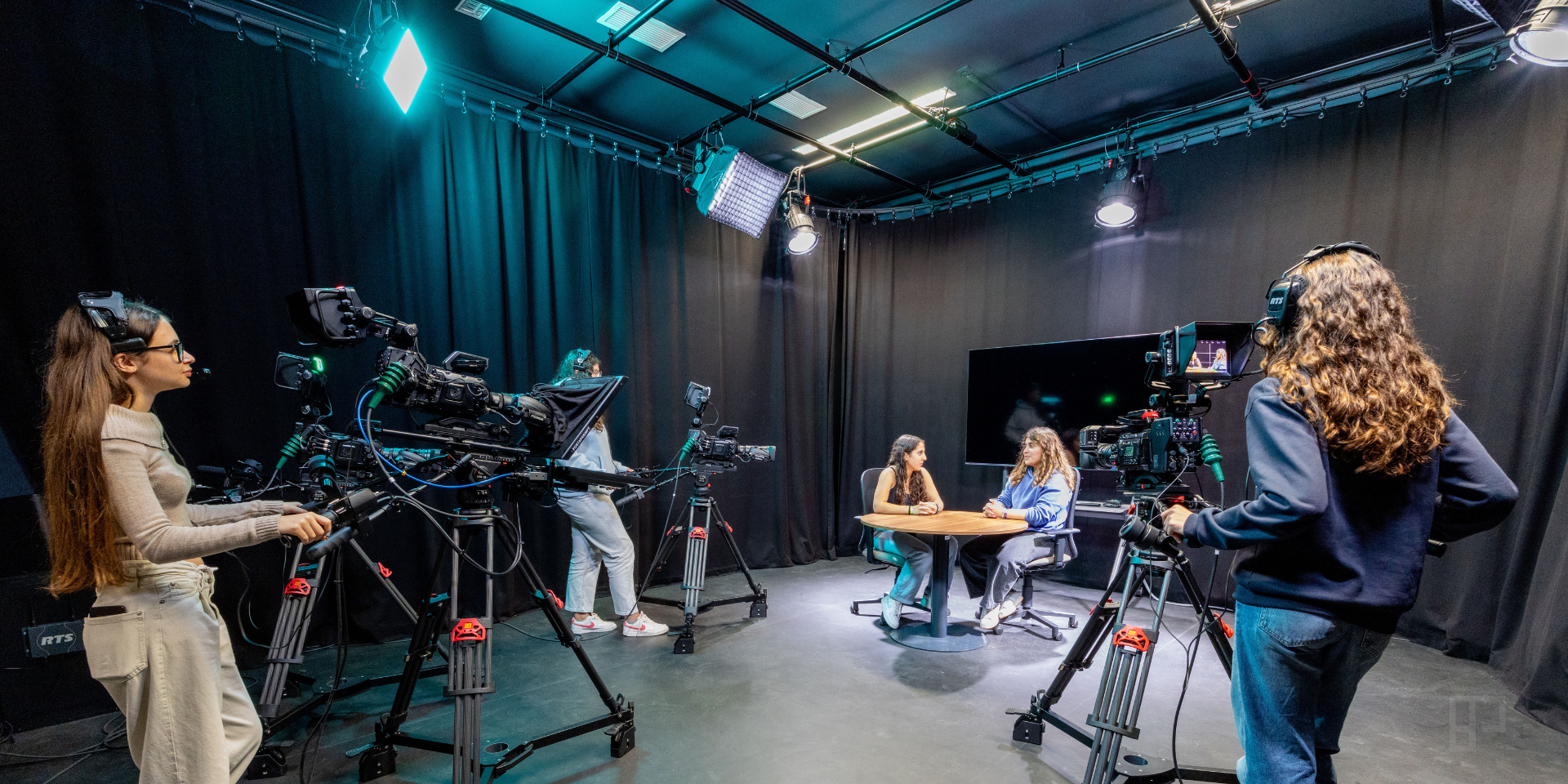
With video, audio, and photography studios equipped with technology from renowned brands such as Blackmagic Design, Canon, Aputure, RTS, FUJINON, Camgear, among many others, and with the support of Pantalha in the complete design, installation, integration, and dedicated ongoing teacher training, students learn in a professional simulation environment. They develop content such as reports, interviews, podcasts, videocasts, and live streaming productions, both in studio and on location. This investment transforms learning and prepares the professionals of the future.
Professional-Level Technology Brings the School into the Market
AEJD, in Faro, has taken a decisive step in modernizing vocational education with the creation of its Digital Specialized Technology Center (CTE Digital), a structural project that brings the school closer to the concrete realities of the creative industries, media, and communication sectors. This transformation results from a strategic vision that combines pedagogical innovation, technological investment, and a specialized partnership in the design, implementation, and ongoing support of the project.
With over 30 years of experience in training technicians in communication and multimedia, João de Deus HighSchool identified the need to align education with the rapid technological evolution of the audiovisual sector. To ensure that this modernization would be consistent, functional, and sustainable, the school established a partnership with Pantalha, which assumed a central role in the technical design of the spaces, the construction and installation of the studios, and the continuous training of the teaching staff.
A Project Conceived in Partnership from the Start
From the initial phase, the Digital CTE was designed as an integrated content production ecosystem, combining video, audio, and photography studios with a wide range of mobile equipment. This partnership made it possible to align the school’s pedagogical needs with technological solutions used in the professional market, ensuring coherence between curriculum, equipment, and teaching practices.
Pantalha supported the entire design and implementation process, from defining workflows to the careful selection of technologies, ensuring that the studios were not only technologically advanced but also suited to the educational context and easily integrated into daily classroom activities.
A Blackmagic Design / RTS / Canon / Aputure Ecosystem Designed for Broadcast-Level Training
One of the defining aspects of the Digital Specialized Technology Center is the choice of a Blackmagic Design technology ecosystem, allowing the school to faithfully replicate production environments used by major national broadcasters such as RTP, SIC, and TVI.
The evolution of broadcast solutions and the balance between cost, performance, and technological flexibility have made possible what was long out of reach for educational environments: training students with fully integrated, professional-level technology.
The use of Blackmagic Design technology enabled the creation of a coherent system in which all equipment shares the same operational logic and software ecosystem. This approach significantly facilitates learning, reduces technical complexity, and ensures a smooth transition between different production contexts, from fixed studios to mobile solutions.
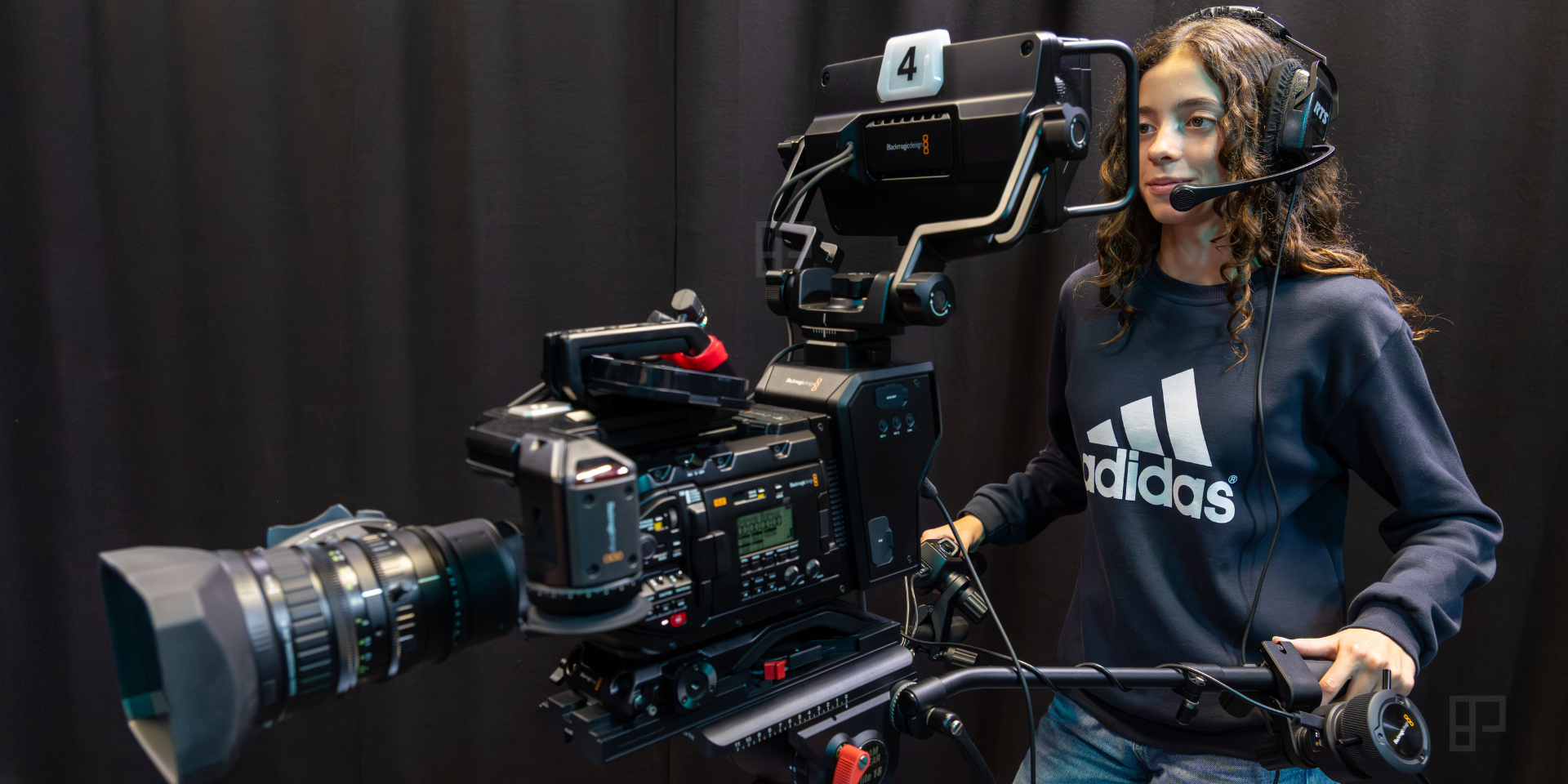
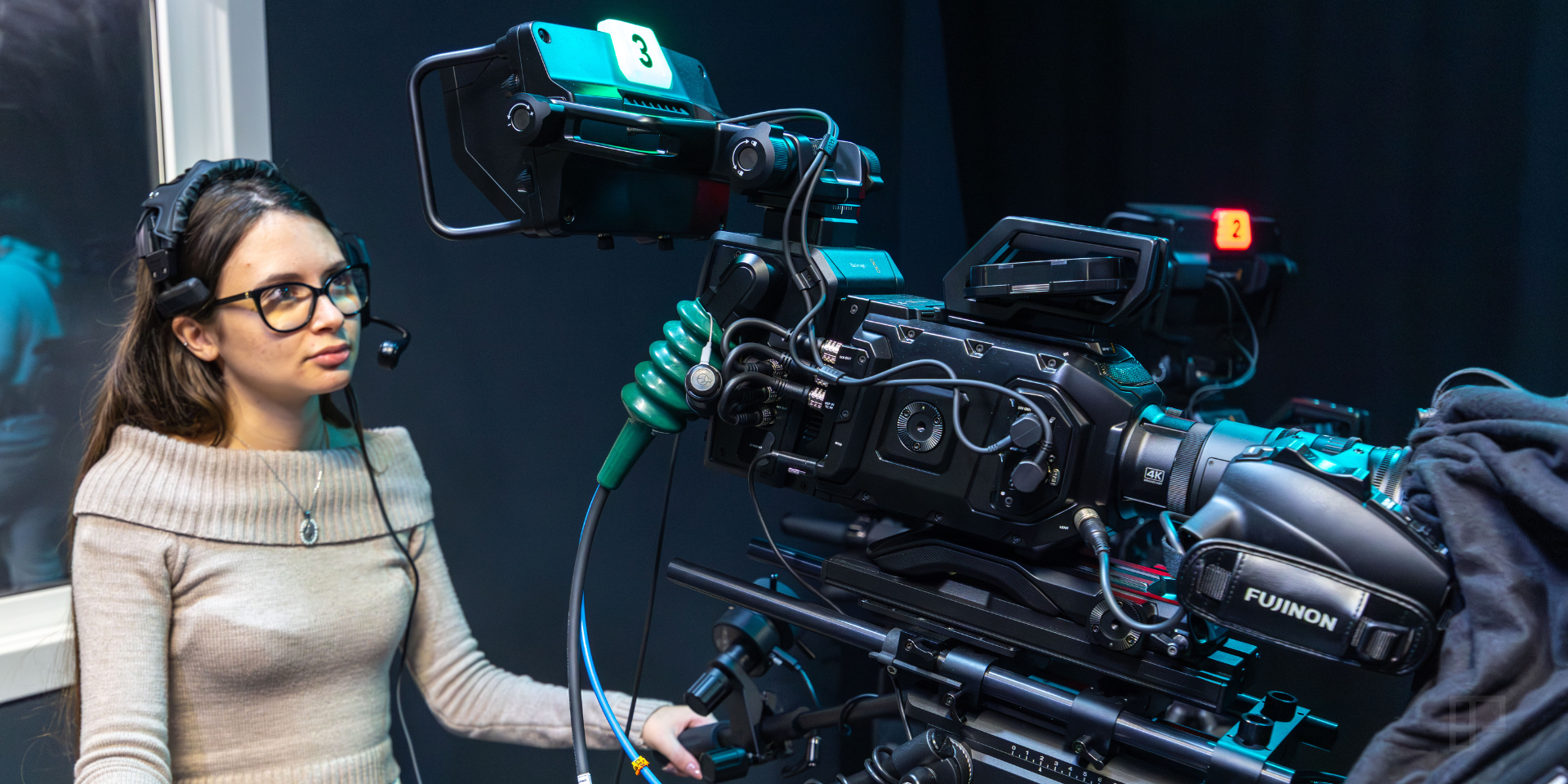
The main studio is built around Blackmagic Design URSA Broadcast G2 4K cameras equipped with Fujinon LA16x 4K lenses, supported by professional Camgear tripods and interconnected via SMPTE fiber. This solution allows a single cable to carry power, 4K video signal, audio, camera control, intercom, tally, and even teleprompter signals. Beyond the robustness and durability of this infrastructure, the school is prepared for future developments associated with IP environments and standards such as SMPTE 2110, which are increasingly present in the broadcast sector.
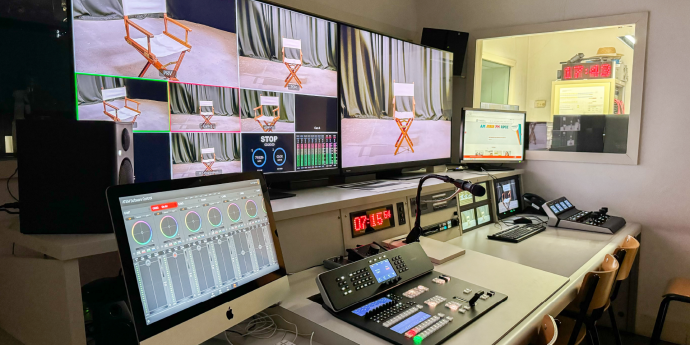
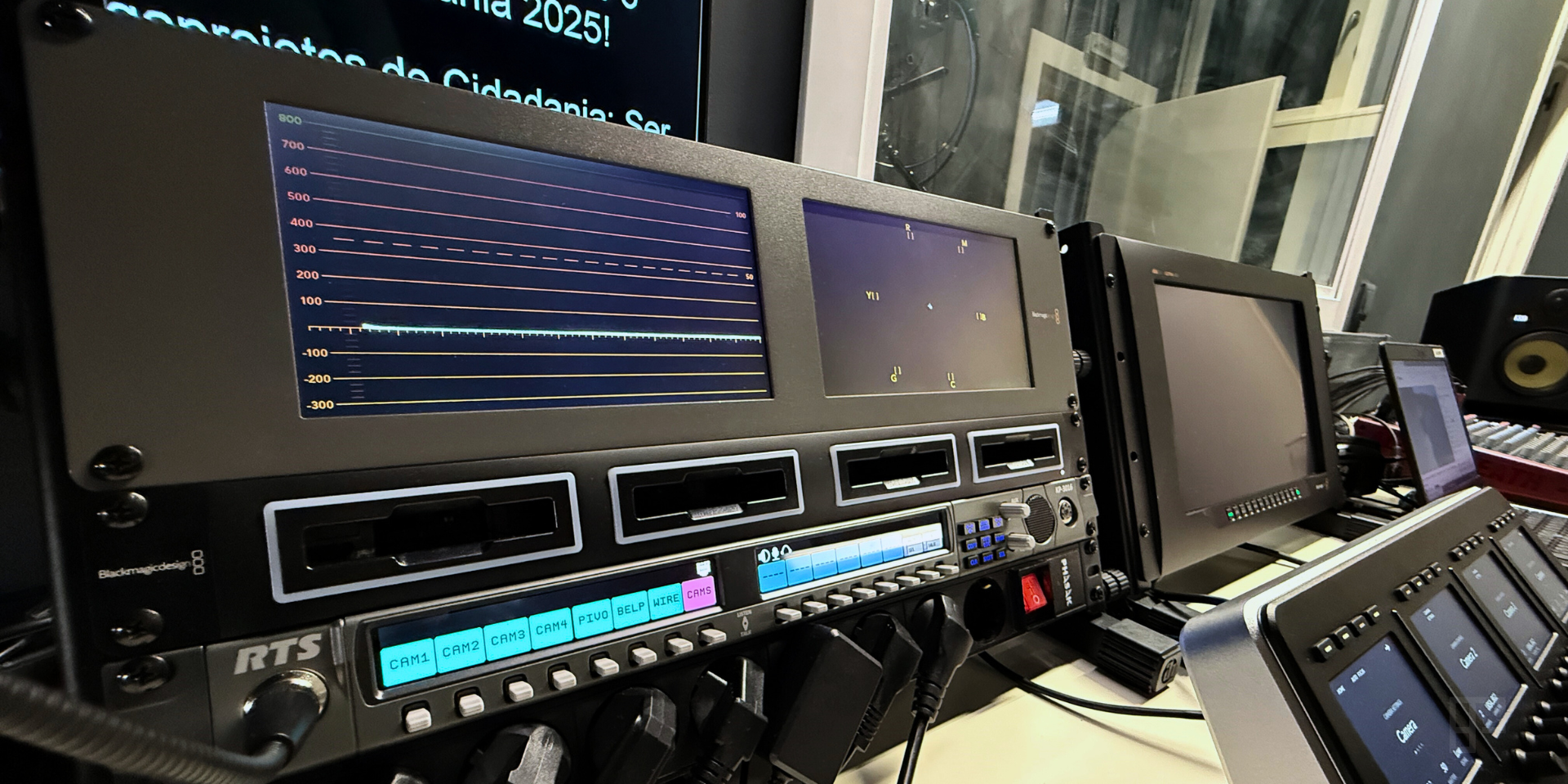
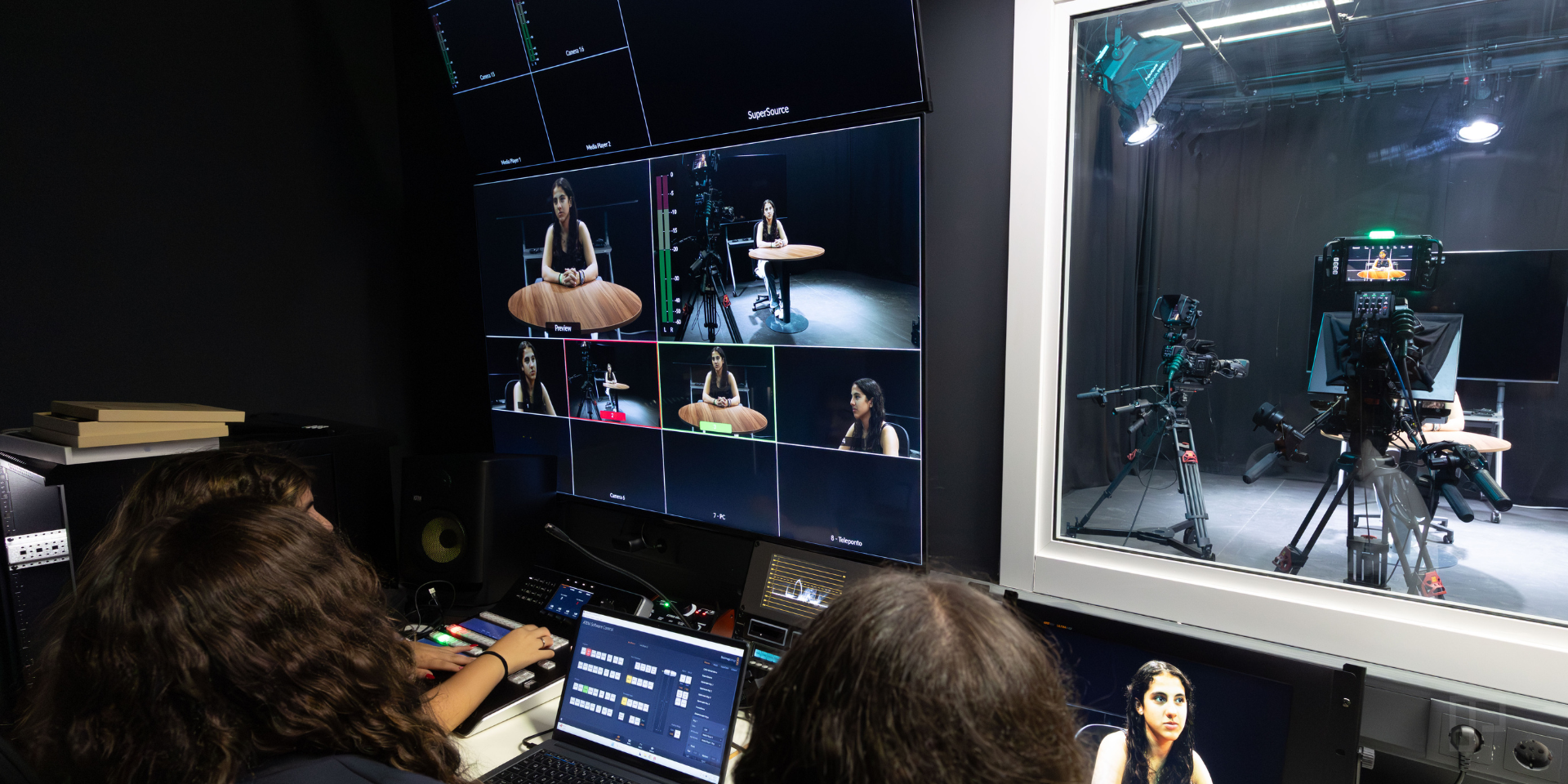
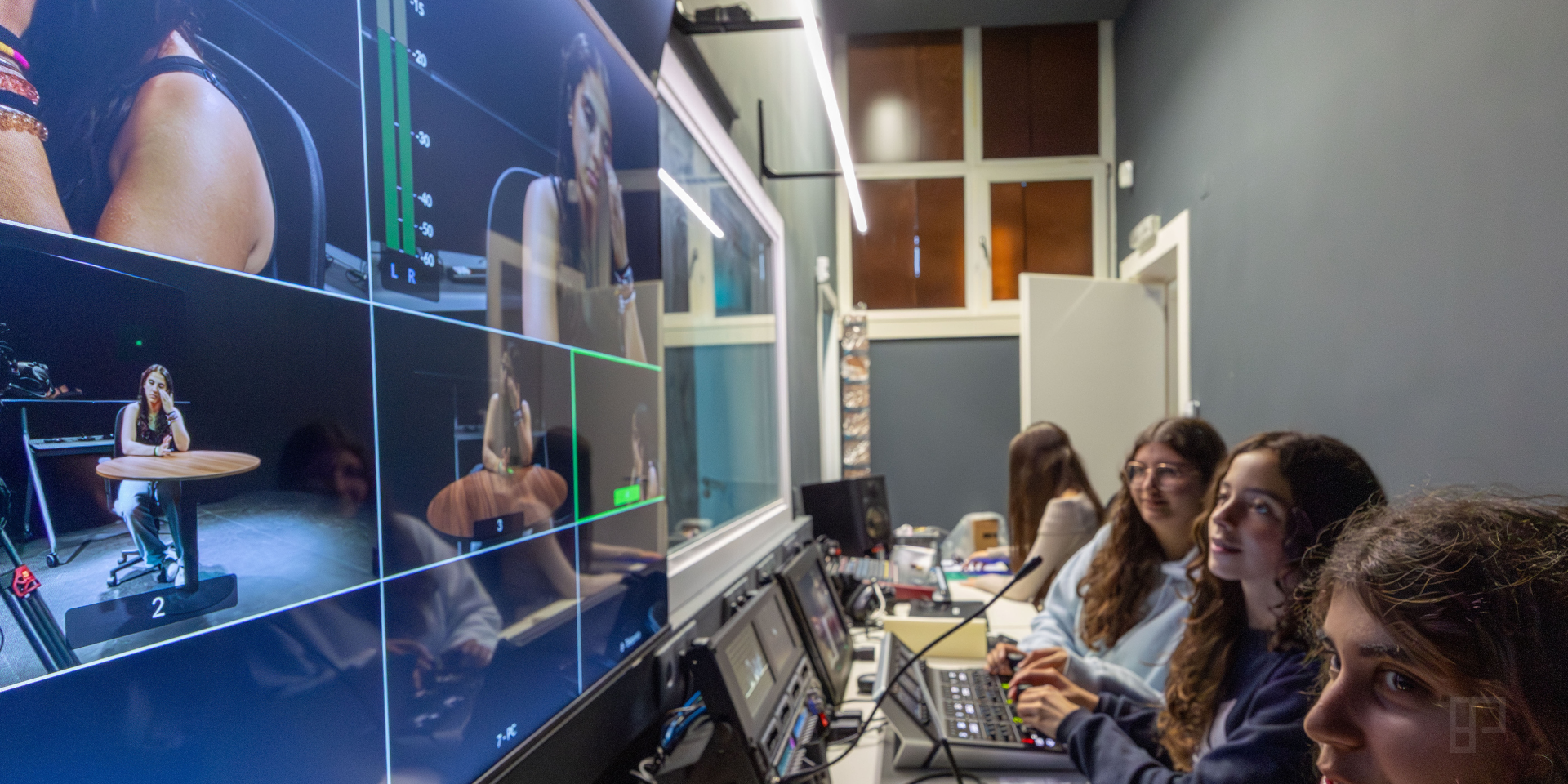
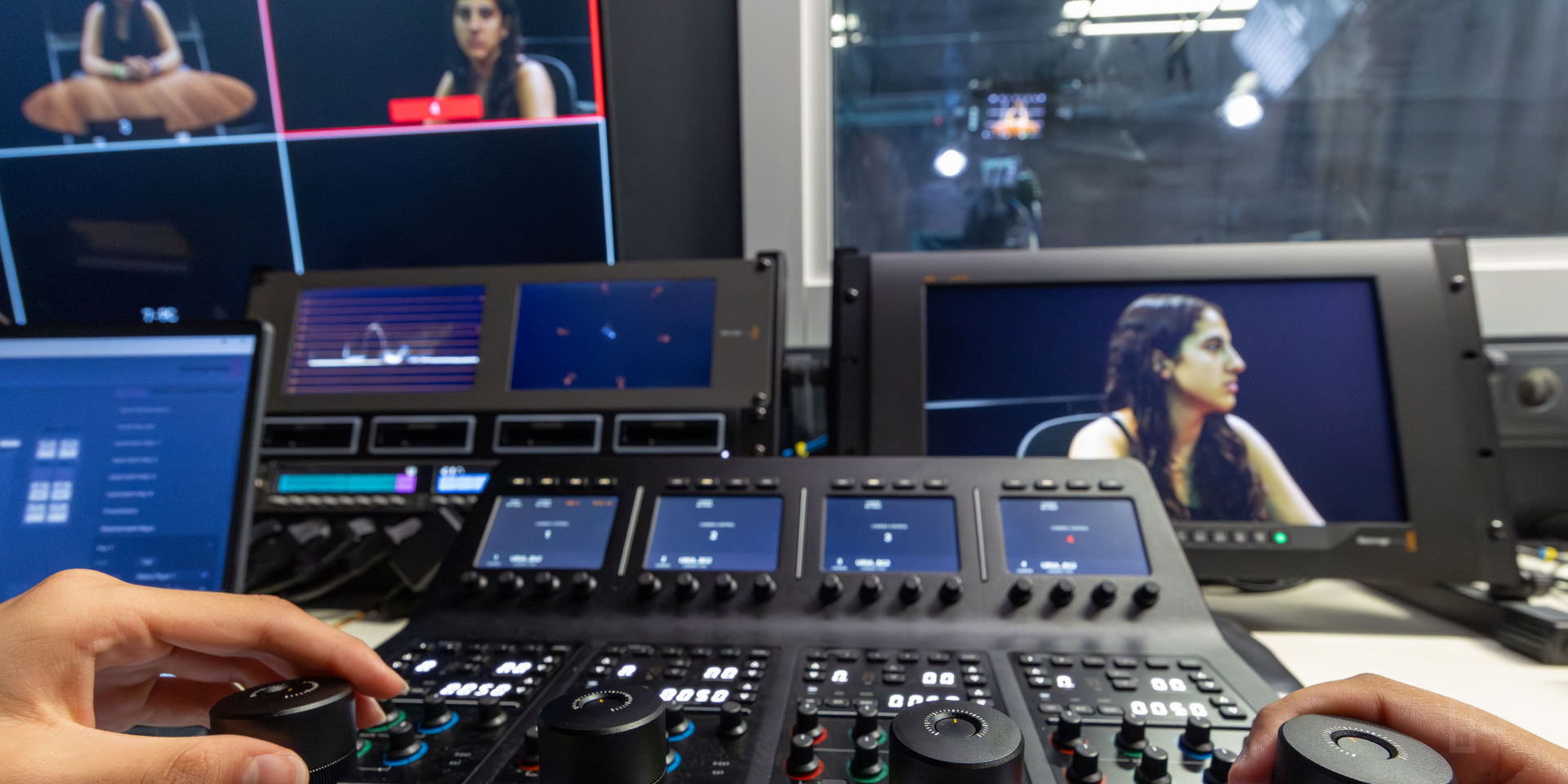
The control room is supported by ATEM Constellation 8K production switchers, complemented by dedicated control panels and advanced monitoring and recording systems such as the HyperDeck Studio 4K. This configuration allows students to work with multiple cameras, integrate external sources, use graphics, manage different program outputs, and carry out live broadcasts or multicamera recordings for later editing.
All intercommunication for instructions between the director, camera operators, wireless production assistants, and presenter is handled by the RTS ODIN intercom base station. This solution provides great flexibility and capacity to manage all communications required in a multicamera environment.
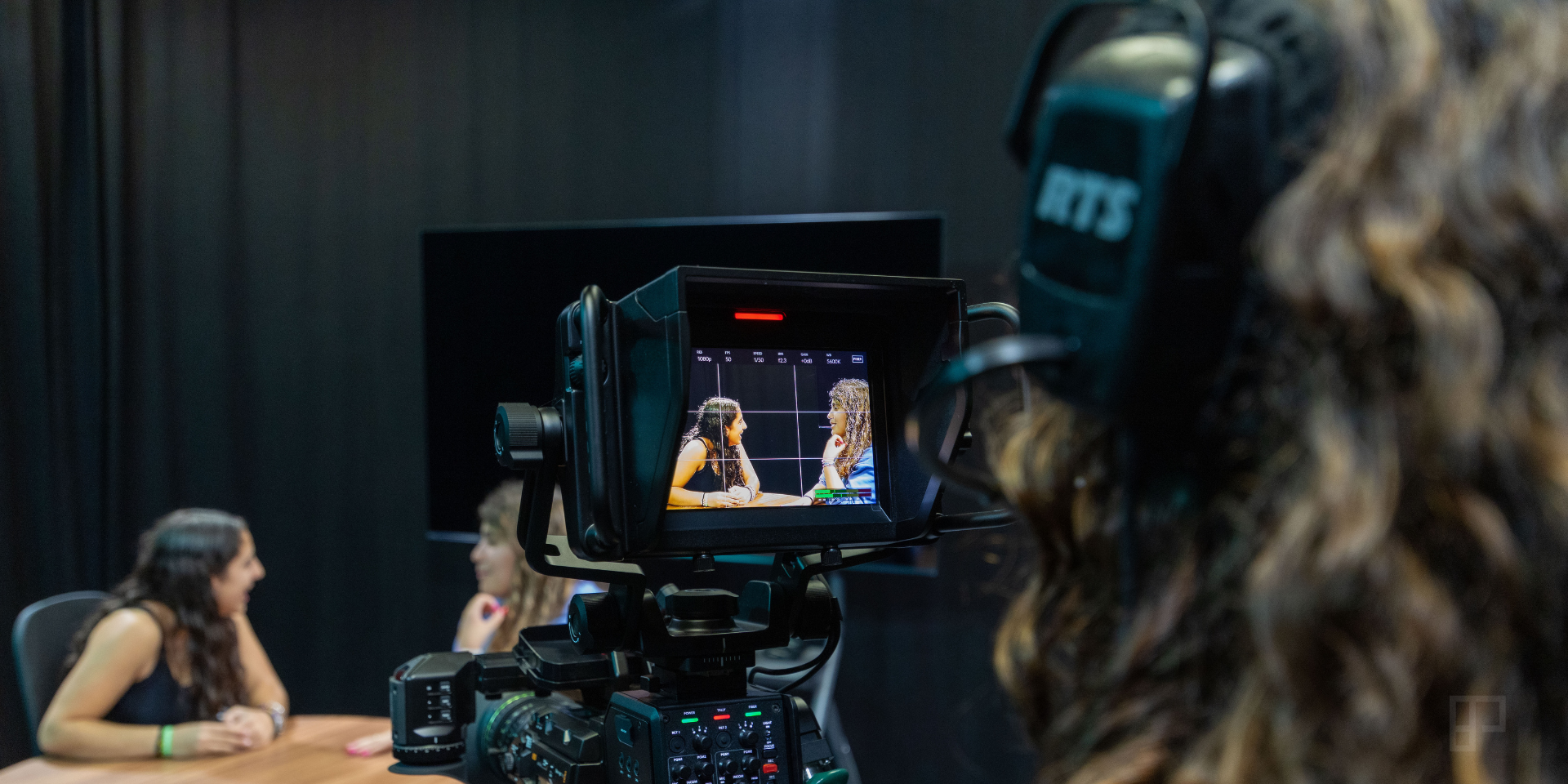
This technological environment allows students to quickly move from being mere observers to taking on concrete technical roles—camera operation, directing, video switching, signal monitoring, and live broadcast management. The learning curve proves to be faster and more effective precisely because the equipment and workflows replicate real market situations.
Regarding studio lighting, the TV studio was equipped with professional RGBWW solutions from Aputure, arranged in a highly versatile and fast configuration to create different lighting environments. Thanks to simple yet highly effective control via a tablet-based application, students can easily create, store, and apply multiple lighting setups intuitively.
Audio, Podcasting, and New Digital Formats
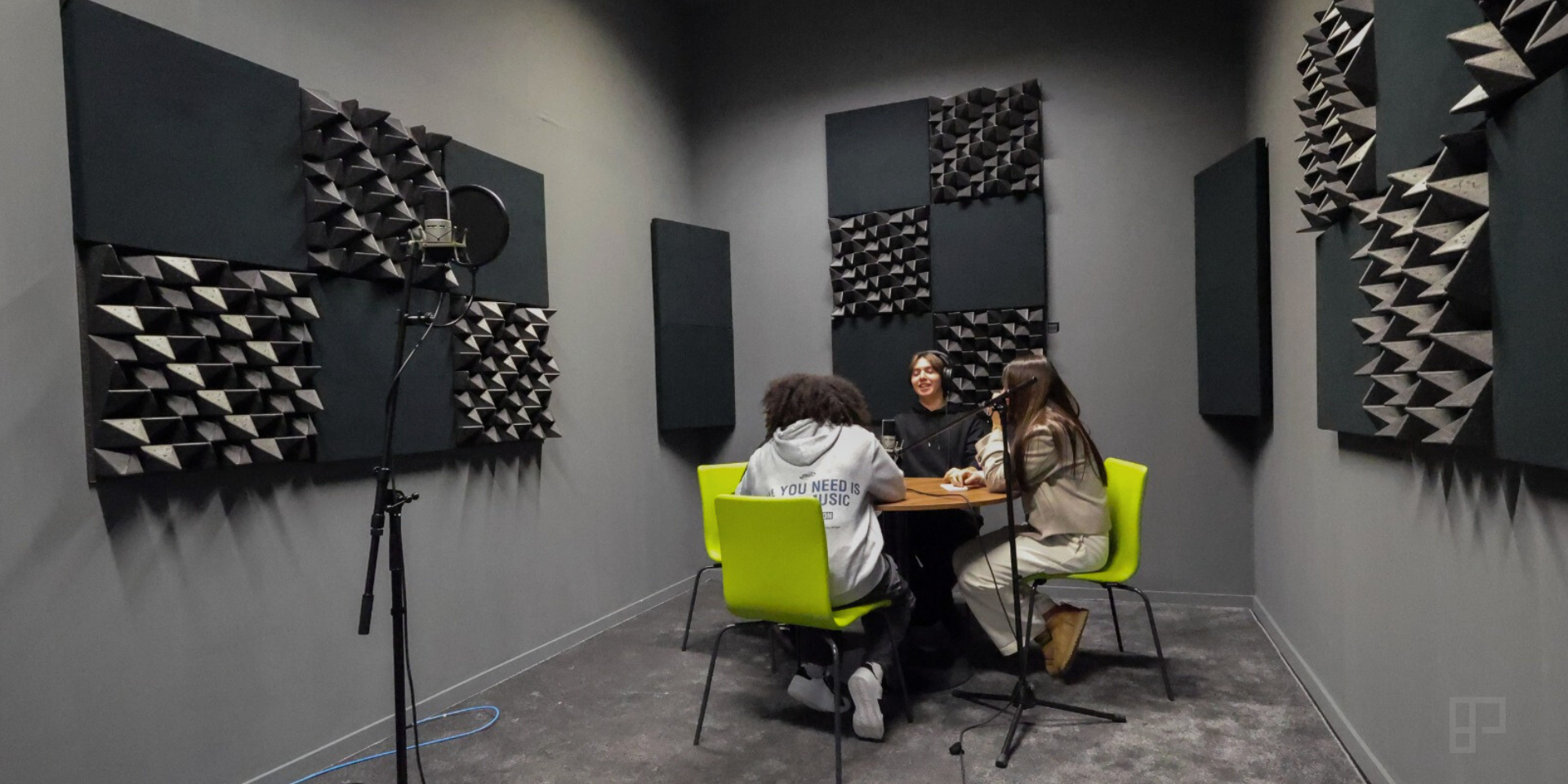
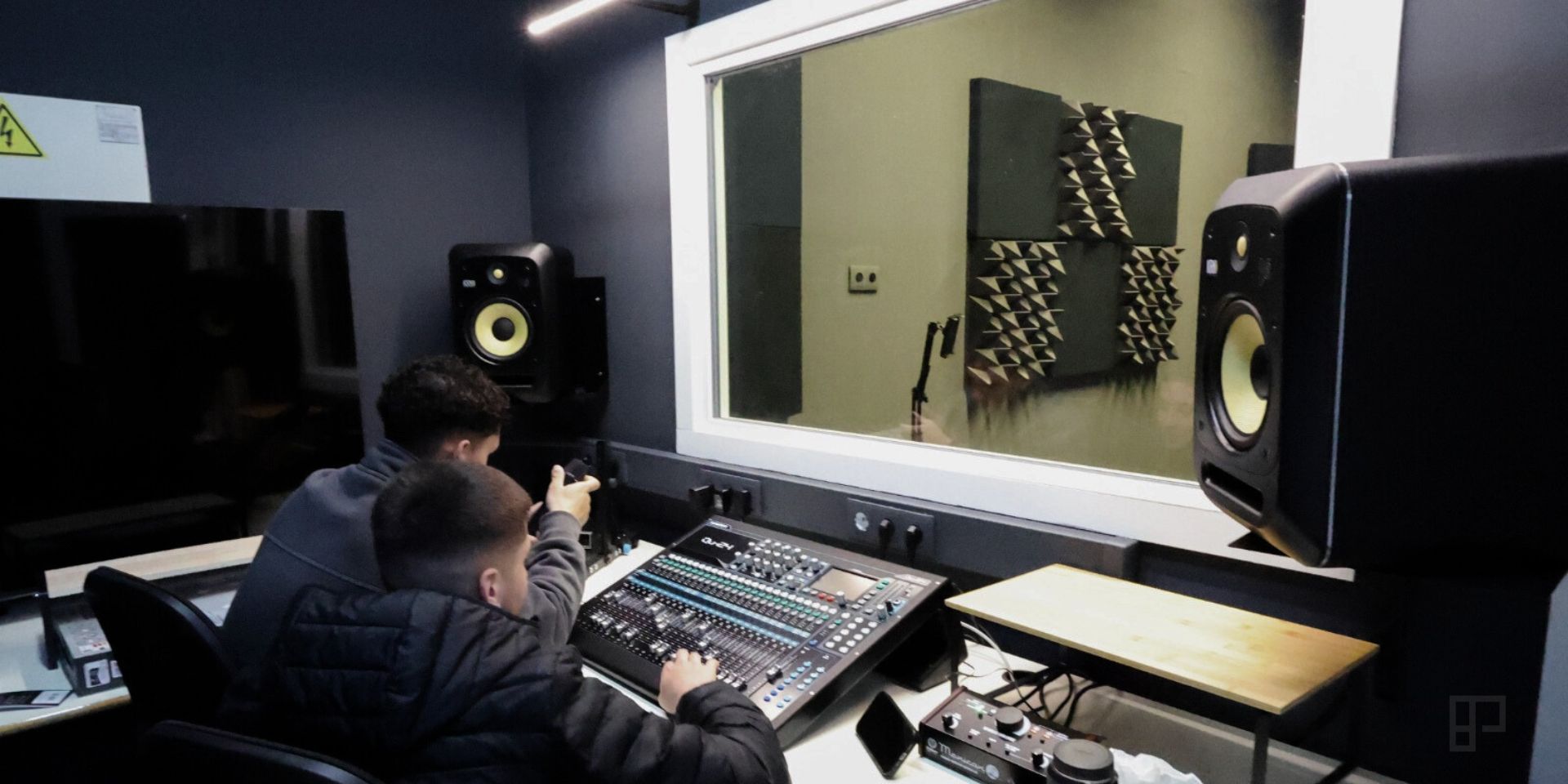
Designed entirely by Pantalha, the purpose-built audio studio is acoustically treated and soundproofed, complementing the video work by offering technical conditions for sound recording, editing, and post-production. Equipped with various types of microphones, a digital mixing console, and studio monitors directly connected to the video studio, the space is used for voiceovers, radio programs, podcasts, interviews, soundtracks, and multimedia content.
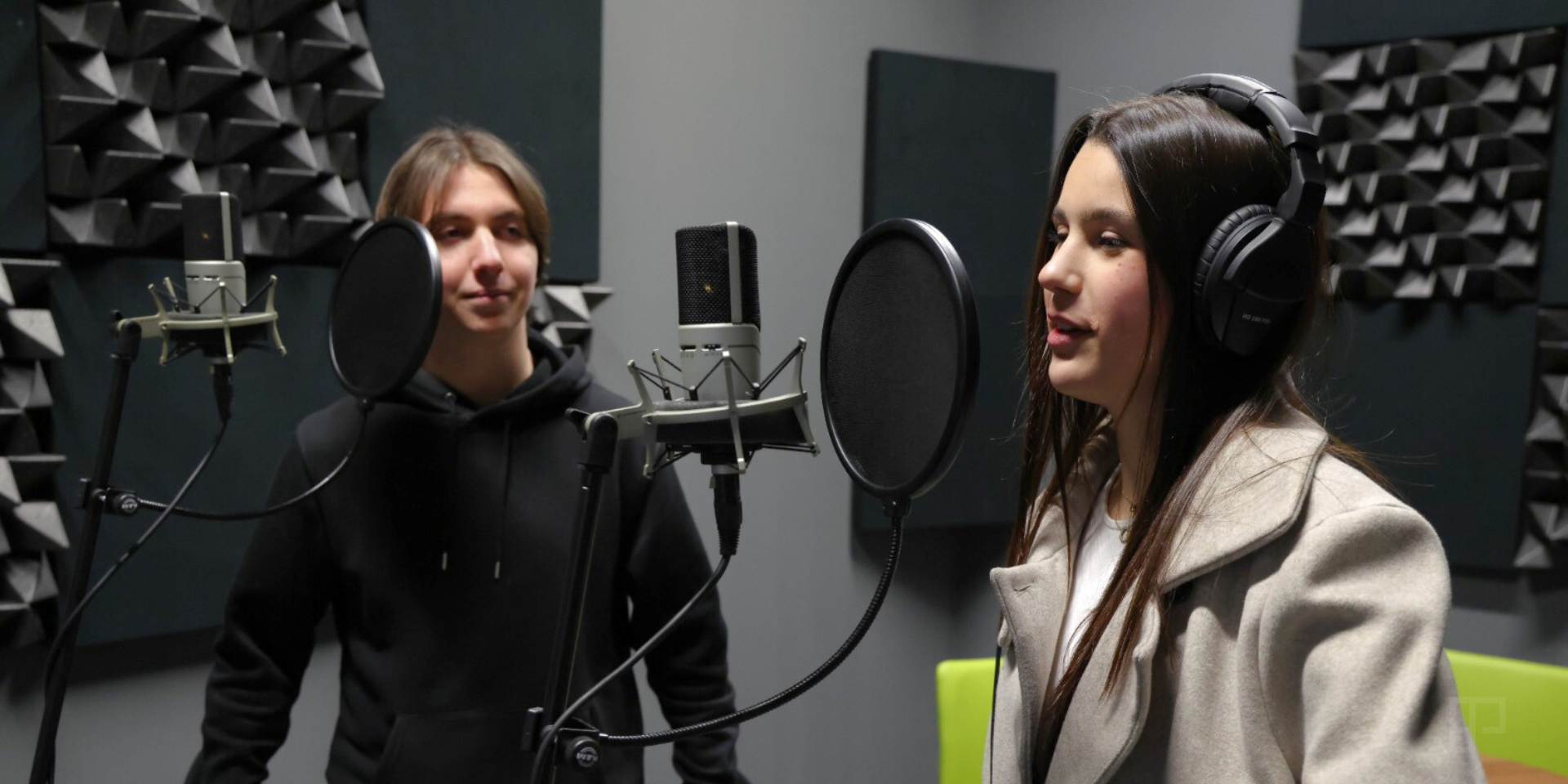
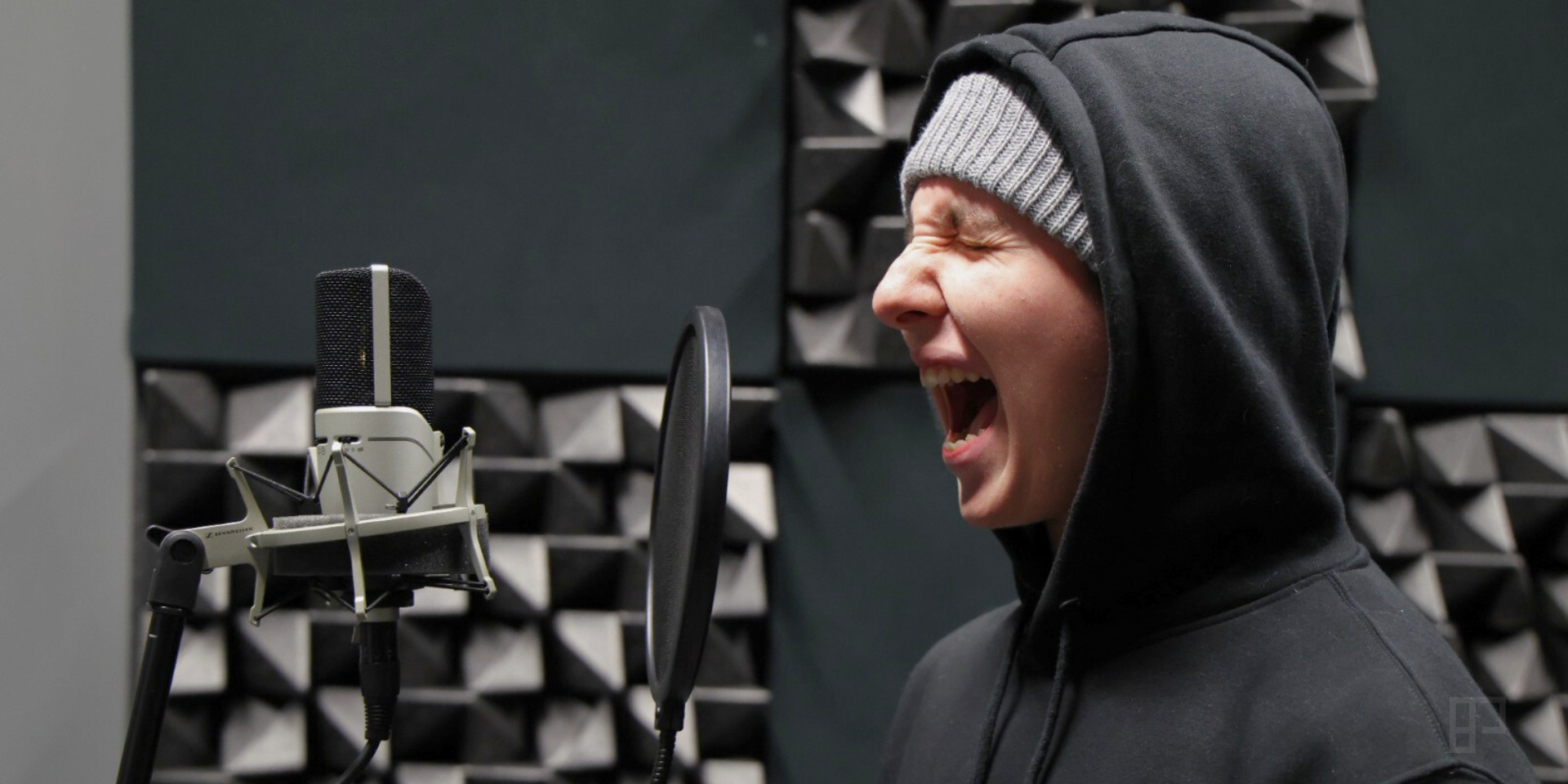
The focus on formats such as podcasts and videocasts reflects the adaptation of education to new industry trends, where on-demand and multiplatform consumption plays a central role. Students learn to plan content, manage timing, work with language, and integrate sound and image, developing highly valued transversal skills.
Professional Photography Integrated into Education
The photography area was strengthened with a significant investment in Canon R1, R3, and R5 digital cameras, along with a wide range of RF lenses, allowing students to explore different photographic genres—from studio to outdoor, from portrait to photojournalism.
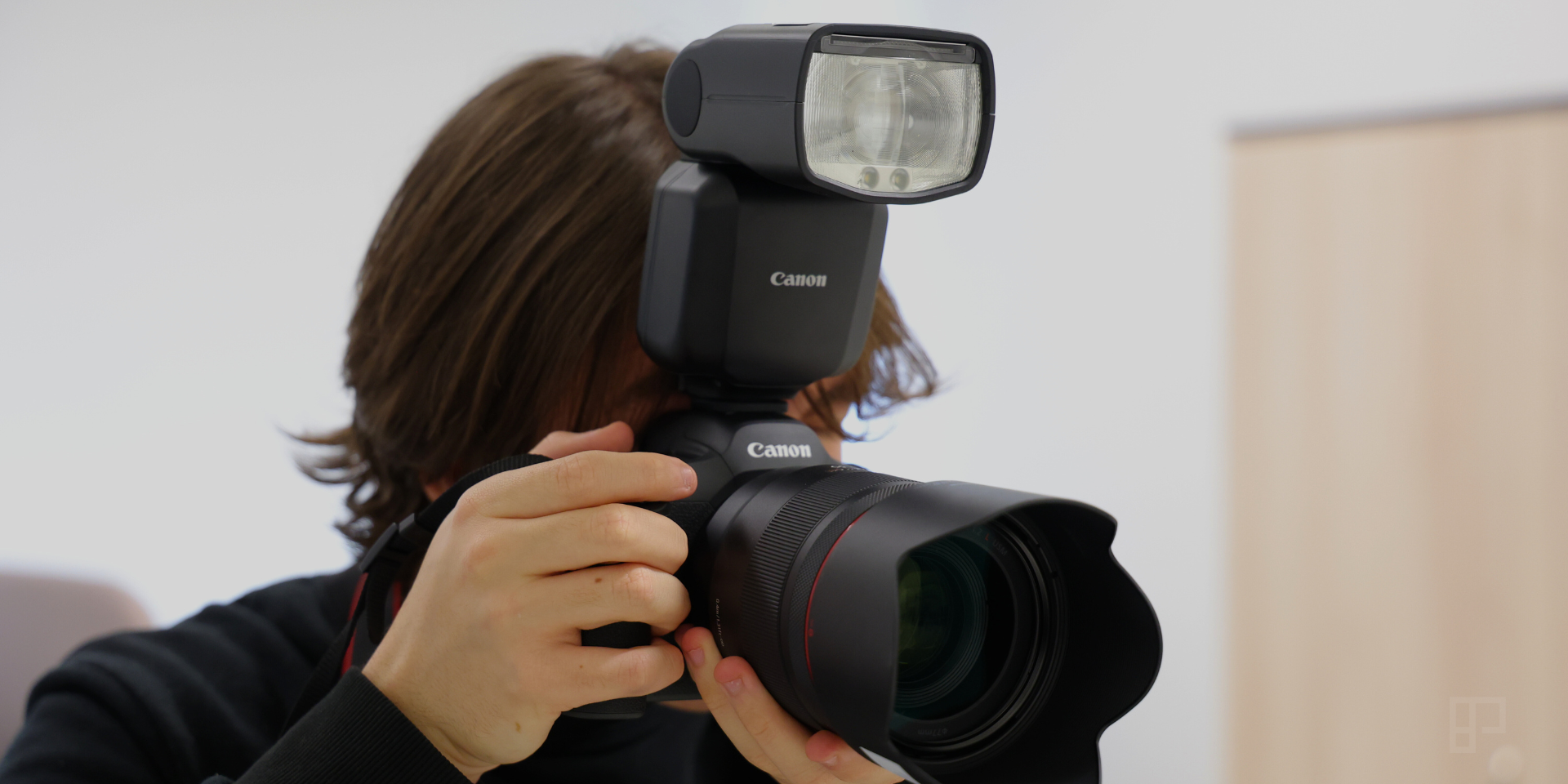
Professional lighting provided by Aputure and SWIT, along with light control systems and support accessories, creates a demanding technical environment where practice is combined with creativity and technical rigor.
On-Location Production and Direct Contact with Professional Reality
In addition to fixed studios, the Digital CTE places a strong emphasis on on-location production, providing mobile equipment for reports, interviews, documentaries, and live streaming outside the studio, with small but autonomous teams.
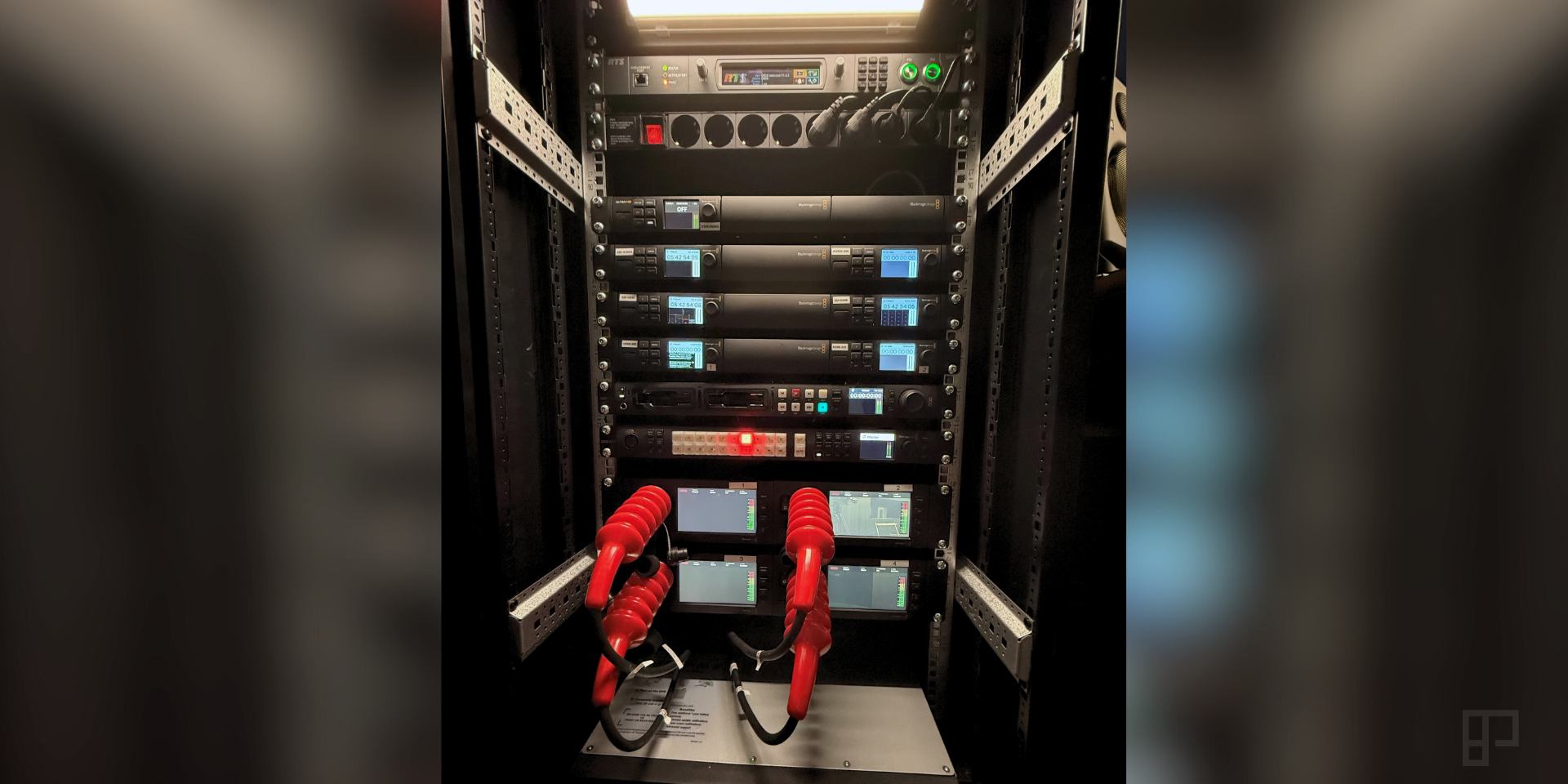
For these external productions, eight Canon XF605 4K video cameras and an ATEM SDI Extreme ISO switcher were supplied, ensuring pedagogical continuity, as the operational foundation is common to the entire studio production system. These cameras can also send wireless video signals to the mobile control room using SWIT transmission solutions, allowing greater flexibility and freedom of movement in spaces where video cabling is not feasible.
This pedagogical model encourages responsibility, collaborative work, and adaptability—essential skills in today’s audiovisual market. An equipment request system also allows students to develop curricular and personal projects outside class hours, strengthening the link between school and professional practice.
Technological Innovation Serving the Future
Innovation at the Digital CTE goes beyond the installed technology to include how it is integrated into teaching. Students work with real production workflows, from pre-production to capture, editing, post-production, and content distribution, gaining a comprehensive view of the audiovisual process.
This hands-on approach, supported by advanced technologies and trained teachers, accelerates the learning curve and prepares students for the concrete challenges of the creative industries, media, and digital platforms.
Continuous Training and Support for Teachers Provided by Pantalha
One of the key factors in the project’s success was the strong focus on training the teaching staff. In addition to technical installation, the partnership included training sessions focused on the pedagogical use of the studios and equipment, enabling teachers to consistently integrate technology into their teaching practices.
This support continued after the Digital CTE became operational through ongoing technical assistance, troubleshooting, and process optimization. This close relationship with Pantalha has been essential in ensuring regular use of the studios, reinforcing teacher confidence, and promoting more practical, up-to-date education aligned with the labor market.
A Partnership with Lasting Impact
More than an infrastructure upgrade, the Digital Specialized Technology Center represents a structural change in AEJD’s educational model. Pantalha’s role as a partner in the design, installation, and continuous support of the project was crucial in ensuring that technology translated into real pedagogical value.
With around 150 students enrolled in Multimedia, Communication, and Tourism courses, the João de Deus School Cluster positions itself as a reference in technological education, demonstrating how collaboration between schools and specialized partners can create innovative, current learning environments closely connected to the labor market.
For more information, contact us by email at geral@pantalha.pt or by phone at 21 754 36 40.
January, 2026